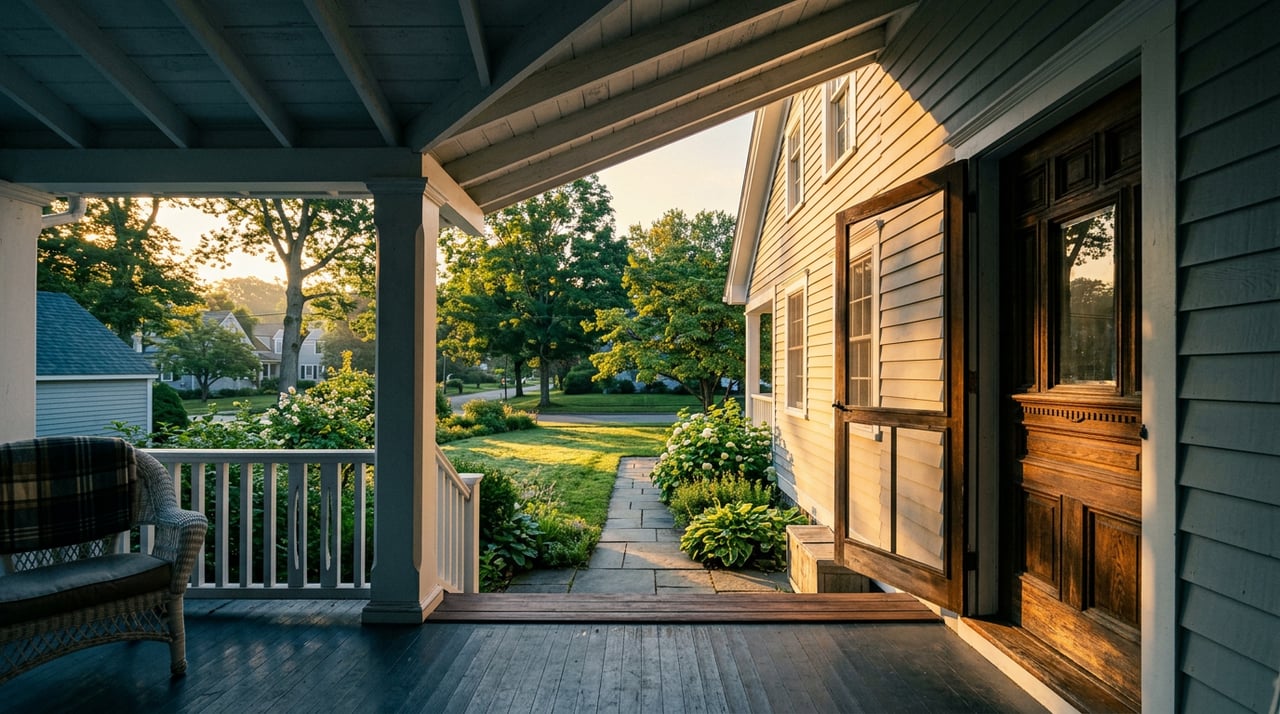
The Corner Of Blackstone Boulevard That Keeps Giving Way
September 24, 2026
September 24, 2026
Blackstone Boulevard is the most fussed-over stretch of pavement on the East Side. The Blackstone Parks Conservancy has planted nearly 300 trees along its median since starting a reforestation project in 2003. Volunteers restored the century-old stone trolley shelter in 2009 and added a garden the following year with help from Butler Hospital. The whole 1.6-mile median is listed on the National Register of Historic Places. People donate benches in memory of family members. It is, by design, a place that gets looked after.
Which makes it strange that one corner of it has fallen apart twice in about a year, and that nobody who lives nearby seemed all that shocked.
In July 2025, a sewer main collapsed on Blackstone Boulevard and sent raw sewage into at least two nearby homes. Resident Anne Bergeron described the damage bluntly to Turn to 10: a dumpster's worth of contaminated belongings, an office ruined, a mess she says the city never fully addressed. By May 2026, ten months after the collapse, she filed a lawsuit against Providence, saying she'd gotten nothing but silence in the meantime. City officials declined to comment, citing the ongoing litigation.
In that same report, Mayor Brett Smiley acknowledged something worth sitting with: more than 60 percent of the city's sewer pipes are over 100 years old, and by his own account, they've been neglected for too long. That is not a Blackstone Boulevard problem specifically. It is a Providence problem that happened to surface, literally, under one of the city's most photographed streets.
On July 21, 2026, a line of severe thunderstorms moved through Rhode Island while a drainage installation project was already underway at Blackstone Boulevard and Irving Avenue. Metal plates covering the work area hadn't been fully secured before the rain hit, and the ground gave way. A sinkhole opened at the intersection, on the southbound side, according to GoLocal's reporting, which cited City Councilor Jill Davidson and Chief Engineer Craig Hochman as being on site that night.
Neighbors described it the way you'd expect.
"If this is going to happen anywhere, it's probably going to happen over here," said Josh Reno, who lives on Irving Avenue and had gone out for a run in the middle of the storm. "It's just ridiculous that this big of a hole opened up less than a couple hundred feet from my house."
Another nearby resident, Laura Stark, called the hole "incredible" in its size and depth. By the next morning the city had stabilized and covered it, and Mayor Smiley said the immediate risk of further collapse had passed. But the contractor asked to keep the intersection closed continuously rather than reopen it between work sessions, which means the corner has stayed shut longer than a single storm cleanup would normally require.
Two failures at the same intersection within roughly twelve months isn't a coincidence you'd expect from a corner that looks, from the sidewalk, like any other quiet spot along a well-tended boulevard.
Here's the part that's easy to miss if you only see the trees. The Conservancy's stewardship and the city's water and sewer infrastructure are not the same system, funded by the same people, or accountable to the same timeline. The reforestation project that gives the Boulevard its canopy started in 2003. The pipes underneath some of that canopy are, per the mayor's own accounting, more than a century old, meaning they predate the tree-planting effort by decades and in some cases by nearly a hundred years.
A nonprofit with donor plaques and volunteer labor can keep the surface of Blackstone Boulevard looking like a place time forgot. It has no jurisdiction over what's buried six feet under Irving Avenue. That gap between what's visibly cared for and what's aging out of sight is exactly why a National Register boulevard can host a summer concert series and a farmers market in the same season that a sinkhole swallows part of an intersection two blocks away.
The south end of the Boulevard, near where it bends into Butler Avenue by Irving, has long doubled as an informal parking and access point for people starting their walk or run. With that corner tied up in construction, the crowd that already gathers at the north end, where Hope Street meets Blackstone Boulevard at Lippitt Park, has become the more reliable entry point by default. That's not a new workaround invented because of the sinkhole. It's the same Saturday morning scene that's been happening at Lippitt Park for years, just doing a little more work than usual right now.
A few things are still running on schedule through the fall despite the mess at Irving Avenue:
None of that changes because one corner is fenced off. If anything, it's a reminder that the Boulevard's daily rhythm doesn't actually depend on any single access point. People adjust. They always have.
If you live along Blackstone Boulevard, you already know the trees are looked after. What's less obvious, until a sinkhole opens twice in the same year, is that the ground underneath answers to an entirely different set of hands, on a much slower and less generous timeline. The Boulevard's reputation was built above the pipes. Its next round of repairs will happen below them, on the city's schedule, not the Conservancy's.
That distinction matters if you're the kind of person who pays attention to the place you live in, which, if you're reading this, you probably are.
If you're weighing what a property along a street like this is actually worth, factoring in both its history and its infrastructure, Kira Greene has spent years walking these same blocks. Request a Complimentary Market Consultation whenever you're ready to talk specifics.
Stay up to date on the latest real estate trends.
Ask Kira and she will happily tell you why Providence is an amazing place to call home, with the culture and diversity of a large city and the charm of a small-town community.
Please get in touch to receive market information, listings, or to meet in person!
(401) 339-5621
[email protected]
ADDRESS
369 S Main St
Providence, RI 02903