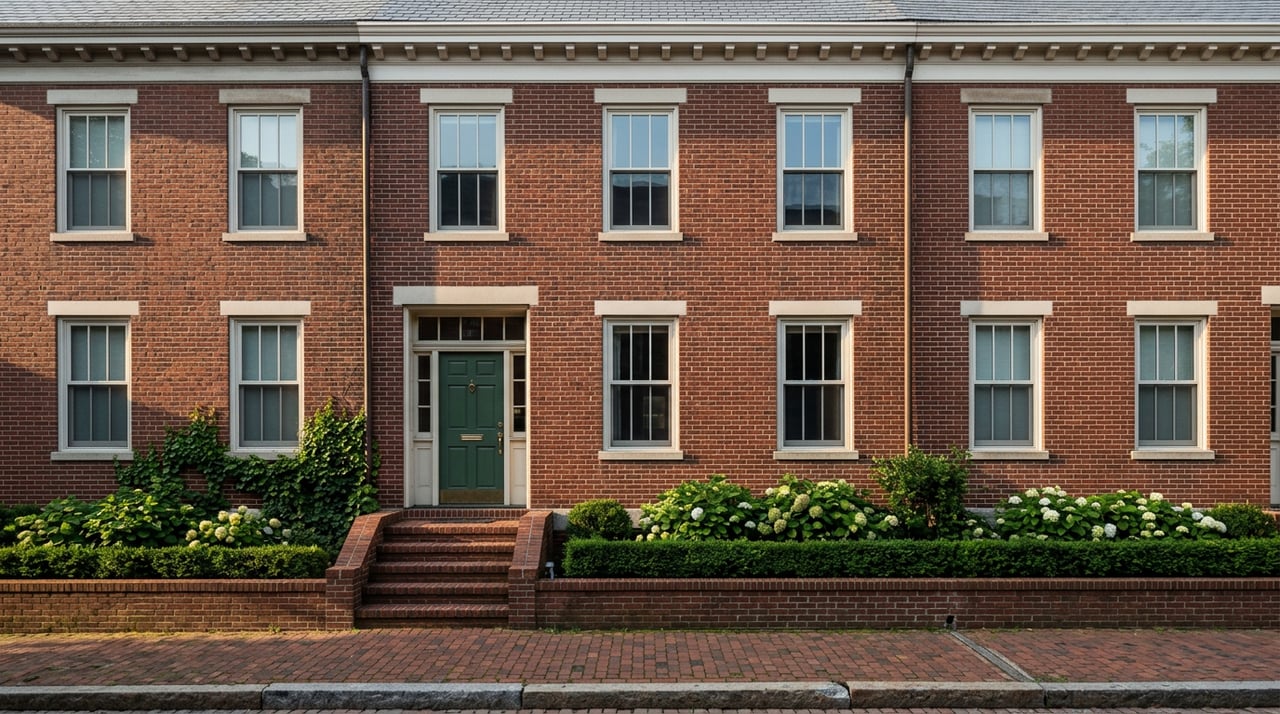
What College Hill Providence September Really Brings
September 3, 2026
September 3, 2026
Walk down Thayer Street in the first week of September and you will notice two things happening at once. The sidewalk tables outside Den Den have a line again. There is a new banner outside Mala Noodle's, one of the newer additions locals have been mentioning on Yelp. The RISD Museum has a fresh show up. And somewhere on a College Hill listserv, someone is already typing a complaint about a party three doors down.
These are not two separate stories. They are the same story, viewed from opposite ends of the same fact: College Hill is dense, walkable, and packed with institutions, and that density is exactly what makes both halves of September true at once. The neighborhood's cultural calendar restarts in the same week its oldest civic complaint does, and residents who understand why tend to enjoy the fall a lot more than residents who treat the noise as a surprise.
Thayer Street's food scene turns over constantly, and the reason is baked into the street's own zoning history. City rules require far fewer off-street parking spaces for retail businesses than for restaurants, which means every time a lease comes up, a restaurant pencils out more easily than a boutique, even on a block that already has more places to eat than park. Long-running anchors like Den Den's Korean fried chicken and East Side Pockets have held on through that churn for years. Newer arrivals like Mala Noodle's are the latest evidence that the churn hasn't slowed down.
A few blocks off Thayer, the RISD Museum's fall lineup gives residents a reason to walk past the crowds rather than through them. A major exhibition of work by Jeffrey Gibson opened August 1 and runs through March 28, 2027, and the museum has a second, larger show, "In the Making: 150 Years of Collecting at RISD Museum," opening November 21 and running into next summer. The Providence Athenaeum on Benefit Street, a members' library since 1836, keeps its own rhythm going with a Friday night Salon series that's free and open to the public, tucked inside one of the neighborhood's most photographed rooms.
And the Avon Cinema, the single-screen art house at 260 Thayer that has been run by the same Providence family since 1938, is still exactly what it has always been: 486 seats, one screen, and a schedule of foreign and independent film that has nothing to do with any renovation happening at a similarly named theater elsewhere in New England. If you've heard chatter about an "Avon" closing for a rebuild, that story belongs to a different state. This Avon isn't going anywhere.
The other September starts the same week, and it has a name residents already know: noise season. The College Hill Neighborhood Association has spent years working with the city, local universities, and a group called the Providence Noise Project specifically to reduce it, because move-in week reliably brings the same complaints back.
What's less obvious is how the city's own record-keeping tells a strange story. Between 2009 and 2015, the Providence Journal's noise-related coverage dropped from roughly 400 articles a year to about 200, according to the Providence Noise Project's own timeline of local coverage. That's not because the city got quieter. It's a gap between what residents were experiencing and what was getting written down, and it's the kind of thing you only notice if you've lived through enough Septembers to compare them.
One College Hill resident summed it up plainly to the Providence Noise Project: "We love living in Providence, but noise is becoming an issue for future living." That's not a complaint about any one party. It's a comment on a pattern that repeats every fall when the academic calendar and the neighborhood's housing stock collide.
The city has taken some steps, on a timeline that tells its own story. A gas-powered leaf blower ordinance passed the full City Council in November 2025, but it does nothing at all until 2028, doesn't touch commercial or residential use until 2030, and doesn't fully phase out gas blowers until 2033. A noise-camera pilot program, one that would issue no citations on its own but would at least measure the problem, was promised for the middle of 2026, timed late enough in the mayor's term that it wouldn't complicate a re-election campaign. Whether it has actually arrived by the time you're reading this is worth checking, because the announcement was light on specifics for something residents have been asking about for years.
What residents can control is the reporting chain, and CHNA has built one that's more specific than the standard city process. If you experience an excessive noise incident, the recommended steps are:
CHNA has also been pushing on the parking side of the same problem through the Thayer Street Planning Study, working with Brown University and the city's Traffic Engineering Department on overnight parking and traffic issues that show up every fall as more cars return to the same narrow streets. The association meets monthly, skipping August entirely, then picking back up September 14, October 5, November 2, and December 7 for anyone who wants to bring an issue directly to the people working on it.
If you've been following Rhode Island news this summer, you may have heard about a new student housing overlay ordinance working its way through City Plan Commission review. It's worth being precise about what it actually covers. The ordinance discussed at the July 28 meeting targets the area around Providence College, not College Hill, after a resident there described several single-family houses converted into rentals housing ten to twelve students each. Ward 14 Councilor Shelley Peterson called that neighborhood "an epicenter of off-campus student housing" during her testimony.
City planning staff acknowledged the obvious follow-up question at the same meeting: could something similar eventually apply to College Hill, which has its own pockets of high student density? The answer, for now, is that the current ordinance is a pilot confined to one neighborhood. Nothing on the table this year changes what's allowed on College Hill's streets. That's a distinction worth knowing if you've seen the headlines and wondered whether new rules were headed your way.
The thread connecting all of this is the same one running through Thayer Street's restaurant turnover, the RISD Museum's walkable proximity, and CHNA's noise-reporting process. College Hill packs an unusual amount of institutional life into roughly a square mile: a research university and an art school's worth of students, a 190-year-old library, a museum with a national collection, and blocks of century-old houses split into rentals. That density is what makes a five-minute walk from your front door land you at a major museum exhibition. It's the same density that means your street can go from quiet in August to loud in September without much warning.
Neither half of that trade is going away, and neither one cancels the other out. Residents who know both calendars, the one on the RISD Museum's website and the one on CHNA's noise page, tend to plan their falls a little better than the ones who only notice the season when it arrives.
If you're weighing what it actually means to own on College Hill, from the trade-offs of a rental-dense block to the value that historic district status and walkability add to a listing, Kira Greene has spent years working this exact stretch of the East Side and can walk you through what it means for your specific address. Reach out to request a complimentary market consultation whenever you're ready to talk specifics.
Stay up to date on the latest real estate trends.
Ask Kira and she will happily tell you why Providence is an amazing place to call home, with the culture and diversity of a large city and the charm of a small-town community.
Please get in touch to receive market information, listings, or to meet in person!
(401) 339-5621
[email protected]
ADDRESS
369 S Main St
Providence, RI 02903