Narragansett RI Neighborhoods Guide to Beach Lifestyles
May 28, 2026
May 28, 2026
If you have ever wondered why one part of Narragansett feels like a classic beach town, another feels like a working waterfront, and another feels tucked away and residential, you are not imagining it. In Narragansett, lifestyle changes quickly from one area to the next because the town is shaped by shoreline access, seasonal traffic, beach policy, and housing patterns more than long driving distances. If you are thinking about buying, selling, or simply narrowing your search, this guide will help you understand how the town’s main neighborhoods actually live day to day. Let’s dive in.
Narragansett is a small coastal town with a big seasonal swing. The 2020 Census counted 14,532 residents and 9,857 housing units, and the town’s comprehensive planning materials estimate that summer population, including day-trippers, can rise to roughly triple the year-round level.
That seasonality shapes everyday life. Beach parking, rental rules, traffic, and shoreline access all influence how busy or quiet a neighborhood feels, especially from late spring through August.
Geographically, Narragansett is also unusually narrow, stretching about 15 miles long and only about one mile wide. That means the town’s neighborhoods are less about distance and more about how each section connects to the water, roads, beaches, and public access points.
The town officially recognizes villages including Bonnet Shores, Great Island, Narragansett Pier, Point Judith, Galilee, and Sand Hill Cove. Locally, you may also hear shorthand like The Pier, Little Neck, or Point Judith Neck, which reflects shoreline geography more than a strict neighborhood grid.
Narragansett Pier is the town’s historic downtown beach core. If you want the most walkable, visible, and classic beach-town setting in Narragansett, this is usually the area people picture first.
The town owns about 19 acres of beach in the center of town, and beach access policy plays a big role in how the Pier functions. Seasonal passes are limited to residents and taxpayers, while nonresidents are directed to specific parking lots and hours, which helps explain why summer here feels more managed and more crowded than the off-season.
The Pier also carries much of Narragansett’s resort-era identity. Town history describes the area as a resort destination that later became more accessible to day-trippers as roads and automobile travel improved.
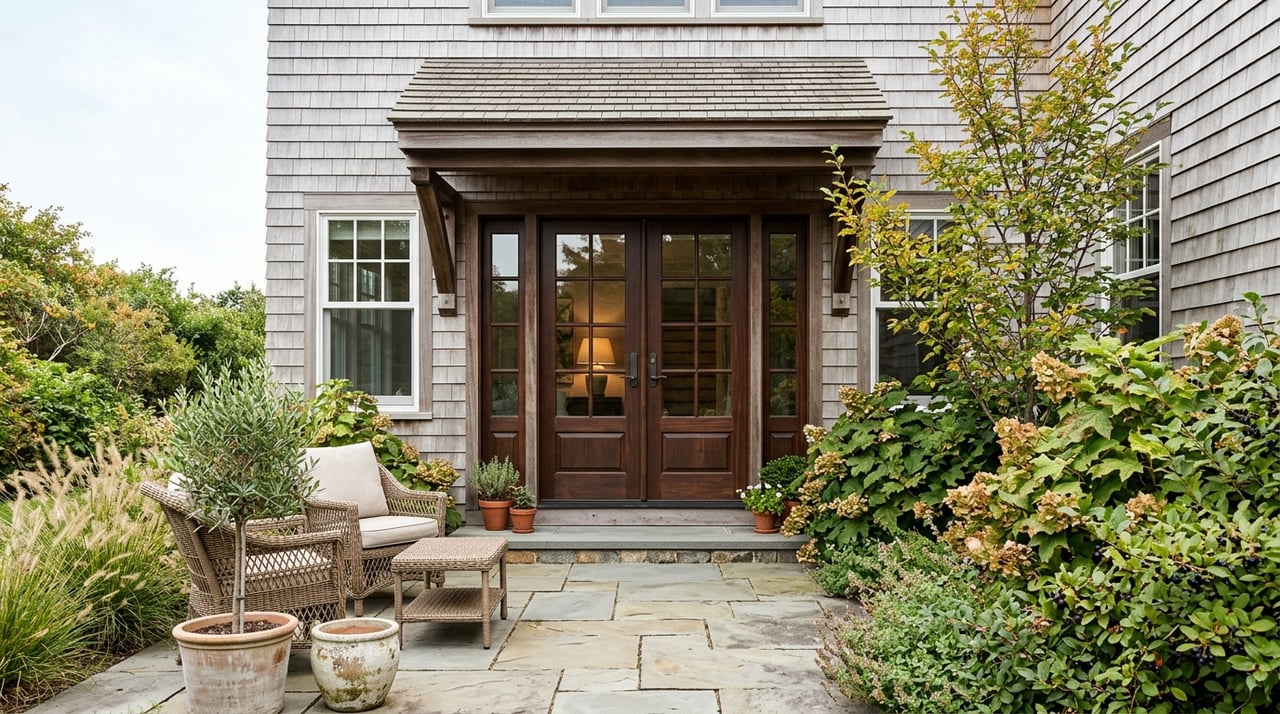
That legacy still shows up in the housing stock and streetscape. You will find Victorian cottages, Shingle Style houses, and other late-19th- and early-20th-century homes in historic districts such as Central Street, The Towers, Earle’s Court, and Ocean Road.
Life in the Pier is closely tied to being near the beach, seawall, and downtown activity. You can expect a more public-facing atmosphere, especially during the summer season when visitors, foot traffic, and parking demand are at their peak.
For many buyers, that energy is a plus. You are close to the scenery, the shoreline routine, and a part of town that feels active and connected.
The tradeoff is that the Pier is not especially tucked away. Compared with more inland or access-limited parts of Narragansett, it tends to feel busier, more exposed to visitors, and more affected by seasonal circulation.
Point Judith and Galilee offer a very different version of coastal living. This is where Narragansett’s beach identity overlaps with its working port, ferry movement, and fishing infrastructure.
The Port of Galilee is one of the largest commercial fishing ports on the East Coast and home port to more than 250 commercial fishing vessels. Great Island Bridge is the only access point to Great Island and also connects people to beaches, restaurants, and the Block Island ferry, so transportation patterns in this area have an outsized effect on daily life.
Town materials describe Galilee as an authentic working fishing village with restaurants and boat tours. That combination gives the south end a distinctly active, commercial, and seasonal character.
This part of town includes a cluster of well-known beach destinations. Salty Brine sits beside the busy docks and seafood restaurants and is very small, at about 100 yards long, while Roger Wheeler is known for calmer water conditions and Scarborough North is one of Rhode Island’s most popular beaches.
Because these destinations sit so close to ferry traffic, fishing activity, and seasonal tourism, Point Judith and Galilee often feel busiest during peak summer periods. Parking pressure, beach rules, and timing matter here more than in many other parts of town.
Rhode Island state beaches in Narragansett also operate with seasonal hours, parking-pass systems, and day-use rules. If you are considering this area, it helps to think beyond the map and picture what a July weekend, a ferry-heavy afternoon, or a peak beach morning might feel like.
Point Judith is best understood as a mix of working-waterfront infrastructure, compact coastal housing, and seasonal beach use. It does not read like a purely residential enclave, and that is exactly what makes it appealing to some buyers.
If you enjoy an active shoreline setting with boats, docks, beach traffic, and a strong sense of coastal industry, this area offers a version of Narragansett that feels lively and rooted in the water. If you want a quieter, more insulated experience, another neighborhood may be a better match.
Bonnet Shores often appeals to buyers who want a neighborhood feel while still staying close to the water. It began as a summer recreational destination and gradually evolved into a more residential area, which is a big part of its identity today.
That blend of seasonal roots and year-round use gives Bonnet Shores a distinctive rhythm. It often feels more neighborhood-oriented than the Pier, while still very much tied to beach living.
Official town documents consistently support careful language around mixed year-round homes, beach cottages, and association-oriented shoreline living. Rather than one dominant housing type, the area is better understood as a coastal residential pocket shaped by its history as a summer colony.
Bonnet Shores is closely tied to shoreline geography and weather conditions. The comprehensive plan notes that Wesquage Pond is a roughly 60-acre barrier pond divided by a causeway, and much of the surrounding area lies in the 100-year flood zone with high water tables.
Bonnet Point also offers views toward Block Island and Beavertail Light, reinforcing the area’s strong connection to the water. It is easy to see why many buyers think of Bonnet Shores as both beach-first and residential at the same time.
The practical side matters here, too. The town’s resilience report identifies Bonnet Shores as an area of flooding concern, and the pond-and-causeway layout means storms can affect circulation and access more directly than in some other parts of Narragansett.
If you want a coastal setting that feels more residential than downtown, Bonnet Shores may stand out. Many buyers are drawn to its blend of local neighborhood atmosphere and beach access.
At the same time, it is important to evaluate flood sensitivity, water tables, and how causeway access could affect day-to-day convenience during storm events. In a place like this, lifestyle and logistics are closely connected.
Great Island has one of the most distinct identities in Narragansett. It is largely residential, feels tucked away, and depends on a single bridge for access.
RIDOT has identified Great Island Bridge as the only point of access to Great Island and the major route serving both summer and year-round homes there. That one detail tells you a lot about the area’s lifestyle.
Unlike the Pier or the beach districts around Galilee, Great Island is not defined by public beach crowds. Instead, it feels more private and more dependent on access reliability.
For Great Island buyers, the central question is usually not beach parking. It is how bridge logistics, storms, and emergency access can affect the experience of getting in and out.
The town’s resilience summary specifically lists Great Island among the causeways of concern. A current town wastewater plan also notes a proposed Great Island collection system serving about 375 residential units, which supports the view that this is a primarily residential area rather than a commercial one.
That combination makes Great Island feel unusually secluded for Narragansett. If you value a quieter residential setting and are comfortable weighing access considerations carefully, it can offer a very different experience from the busier beach-centered parts of town.
No matter which part of Narragansett you are considering, rental policy and seasonality matter. The town formally distinguishes academic, academic/summer, summer-only, yearly, and short-term rental categories, which reflects how much occupancy patterns shape local life.
Narragansett’s zoning code also limits student-occupied dwellings to three college students unless the building is owner-occupied. The key point for buyers and sellers is not to label an entire neighborhood too broadly, but to understand that rental patterns are a townwide policy issue with stronger influence in some areas than others.
Town documents support treating the north end and Pier-adjacent areas as among the more URI-influenced parts of town, although that is an inference from official materials rather than a formal neighborhood designation. For buyers, this means it is smart to ask specific, property-level questions about occupancy patterns, rental use, and seasonal turnover.
If you are comparing Narragansett neighborhoods, it helps to focus on how you want your day-to-day life to feel, not just how close you are to the shoreline. In a town this narrow and seasonal, access patterns often matter as much as the view.
Here is a simple way to think about the major areas:
Beach convenience is also policy-mediated across town. Town Beach seasonal passes are limited to residents and taxpayers, while nonresidents are routed to designated parking areas, and state beaches operate under seasonal pass systems and day-use rules.
In other words, your real experience of Narragansett depends not just on location, but on how that location interacts with parking, passes, summer traffic, and weather-sensitive access. That is why neighborhood guidance on the ground can make such a difference.
If you are weighing a move, planning a second-home purchase, or preparing to sell in Narragansett, understanding these lifestyle differences is one of the smartest ways to narrow your options and make a more confident decision. For tailored guidance on Narragansett’s coastal micro-markets, reach out to Kira Greene.
Stay up to date on the latest real estate trends.

Ask Kira and she will happily tell you why Providence is an amazing place to call home, with the culture and diversity of a large city and the charm of a small-town community.
Please get in touch to receive market information, listings, or to meet in person!
(401) 339-5621
[email protected]
ADDRESS
369 S Main St
Providence, RI 02903